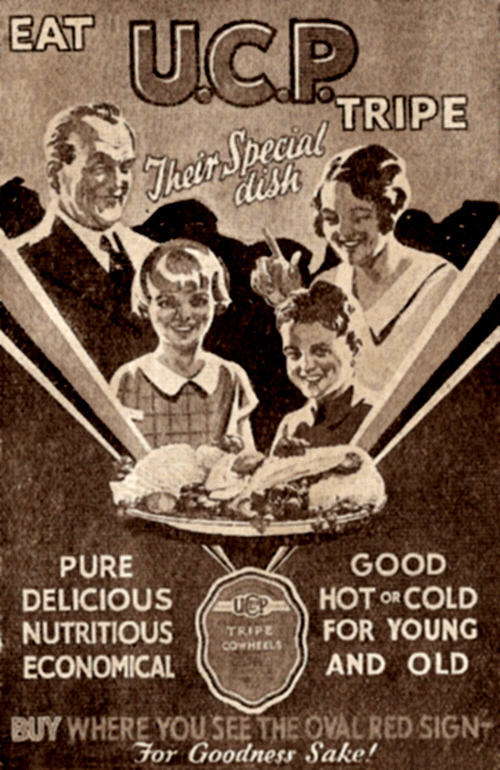
UCP Tripe Advertisement 1932
Image: http://www.unitedcattleproducts.co.uk
Tripe was formely considered among the most valuable of meats, so valuable that it was worth making 'mock tripe' from less expensive ingredients.
In English practice the, naturally green or grey, tripe is always washed, bleached for up to two days and boiled for about an hour so that the product offered for sale is creamy-white and ready to eat.
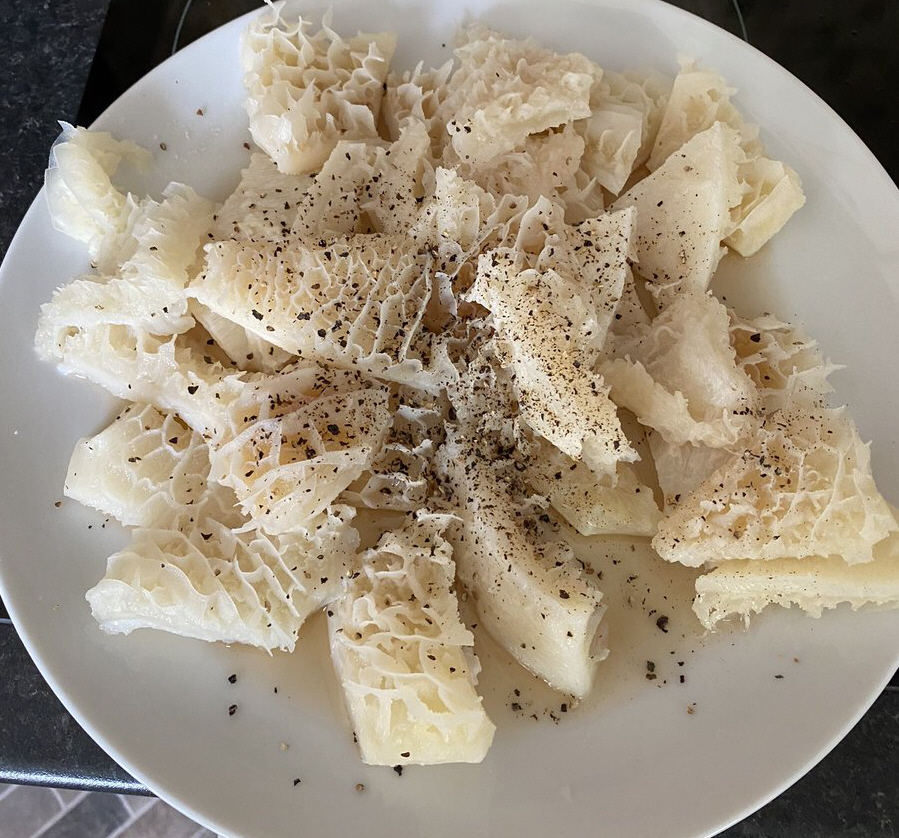
Honeycomb tripe - ready to eat
Image: @GedAshton "How much??? £4.65 for a pound of Honeycomb @ashtonmarket"
There was once an entire empire devoted to the edible stomach. In the 1950's and 60's United Cattle Products, 'The UCP', had a chain of no less than 146 tripe restaurants throughout the North West and a processing plant in the 'tripe colony' of Beswick in east Manchester. In Wigan, Vose and Son's wood-panelled 'Tripe De Luxe' restaurant, opened in 1917, had seating for 300 and its own Ladies' Orchestra.
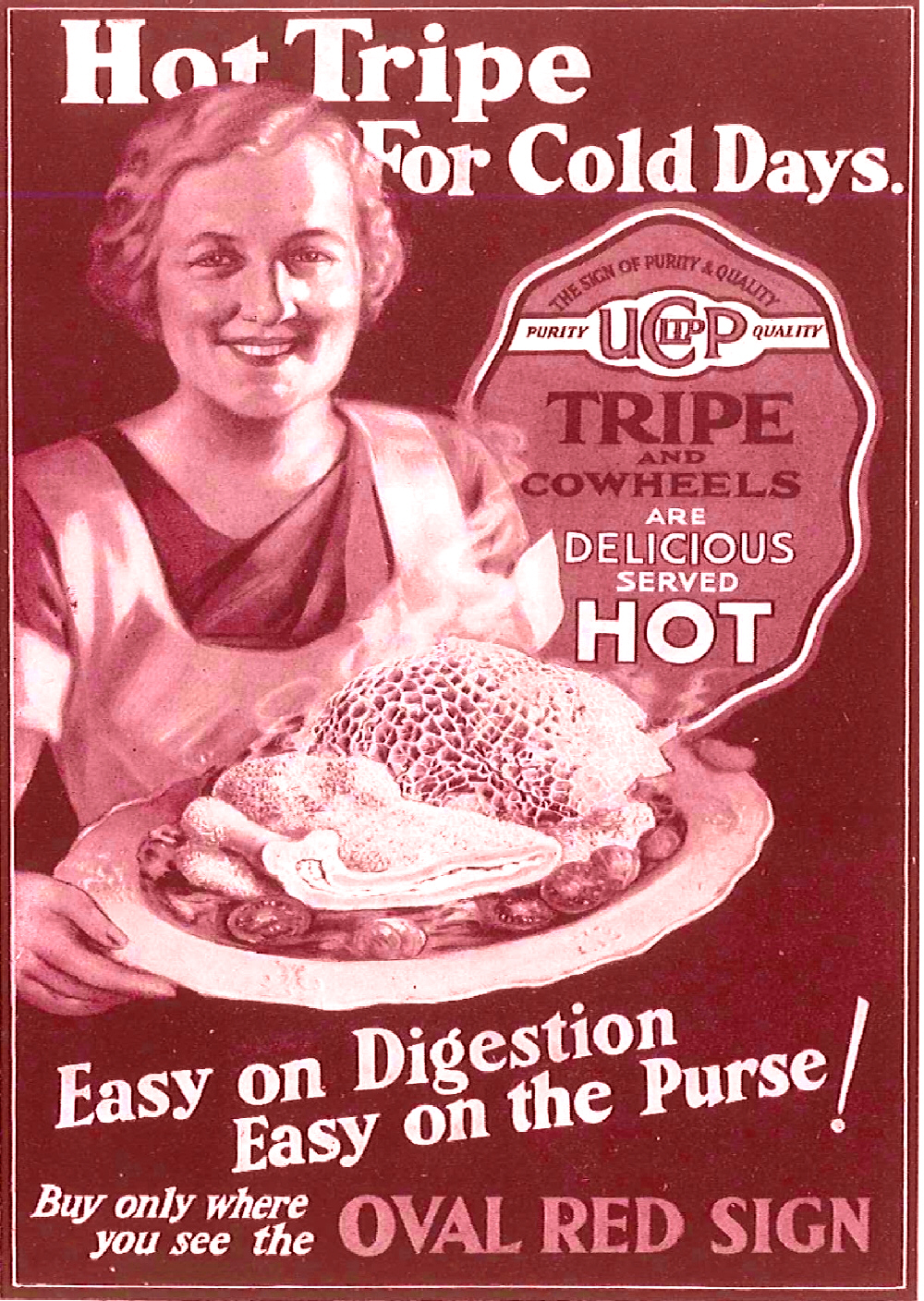
UCP Tripe Advertisement 1940
Image: http://www.unitedcattleproducts.co.uk
 EXTERNAL LINK:
United Cattle Products supporters' site
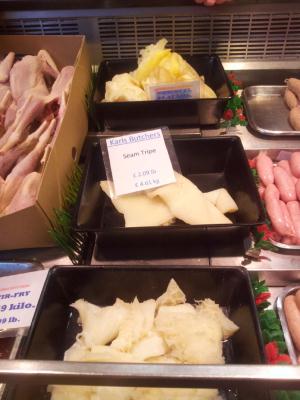
Bolton Market, 2013
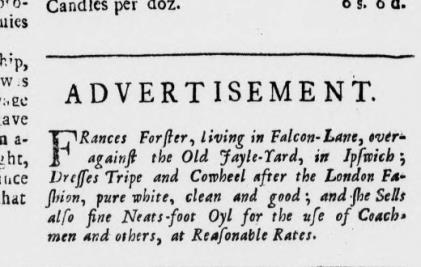
Ipswich Journal - Saturday 10 December 1720
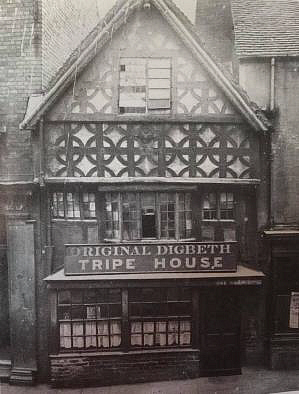
Digbeth, Birmingham, Tripe House
Origin: Unknown