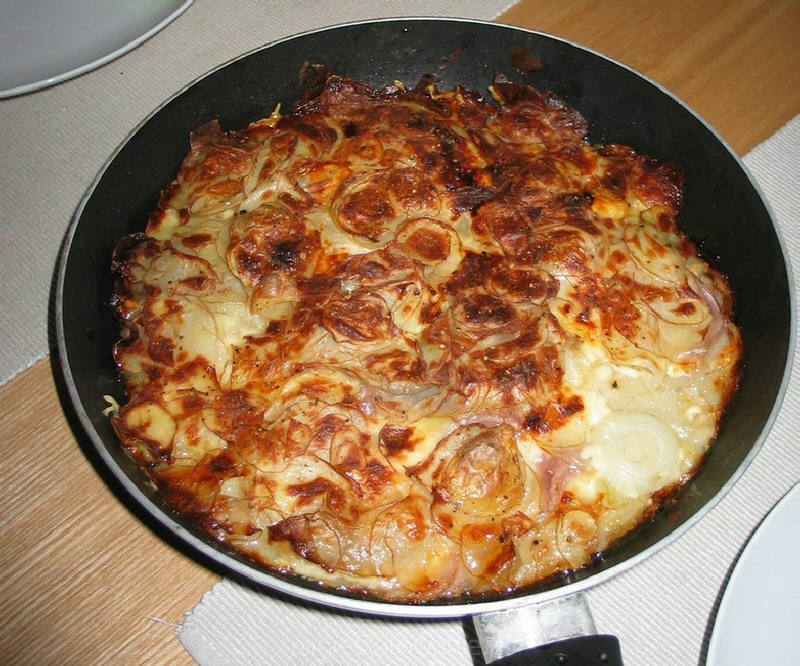
Panhaggerty
Image: Unknown
This dish is now sufficiently popular to have gained the nickname 'Pan hag', but its origin remains entirely obscure. It does not appear in any early cookbooks, nor in the 19th Century glossaries such as 'Northumberland words' (1892) by Richard Heslop nor even in Wright's 1903 'English Dialect Ditionary'. It is often said to have come to prominence in mining communities during the 'hungry' 1930's, but we can find no direct evidence for this. It does, however, seem to be the case that the name became popular following the broadcast of the play 'The Episode of the Pan-haggerty' by FE Doran on the BBC's Northern Service in July 1936.
The name possibly derives from 'hashed' as in 'chopped', or from 'ragged' for its irregular appearance.
Just like the very similar French 'gratin' there is a distinct tradition that Panhaggerty should always be served from the vessel it was cooked in, and 'panhin', is an old English word for a small cooking pan.
 Original Receipt in the 'Nottingham Evening Post' - Thursday 5 March 1936
NORTHUMBRIAN PAN HAGGERTY: Slice a pound of peeled potatoes and half pound of skinned onions thinly and grate four ounces of cheese. Melt a little fat in a hot frying pan, spread with half tho potatoes, cover with the onions, add the cheese, sprinkle with pepper and salt, and put the remainder of the potatoes on the top. Fry over slow heat till the vegetables are just cooked, brown the top potatoes under the grill, turn on to a warm dish, and serve at once. In the old days the top was browned before open fire.